
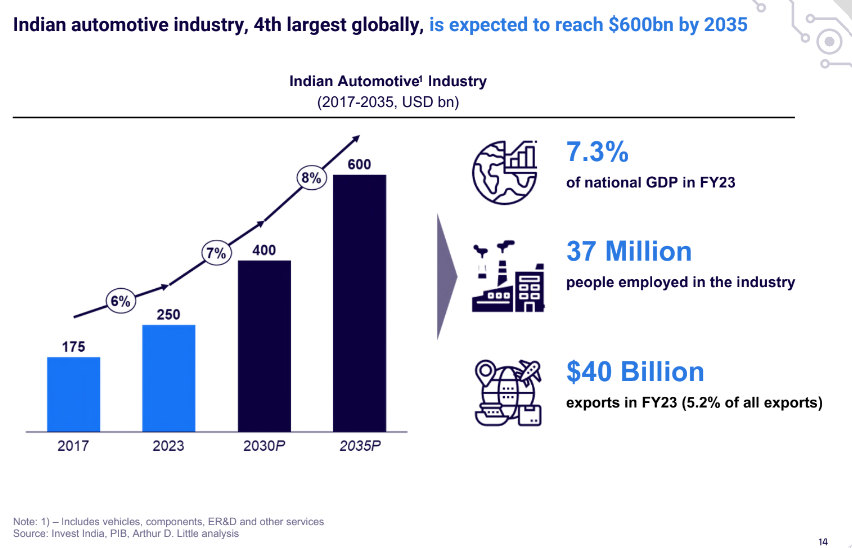
The Indian automobile industry stands at a pivotal juncture in 2025, grappling with domestic challenges while also capitalizing on emerging global trade dynamics.
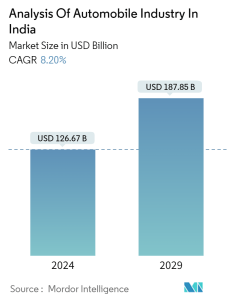
Current Landscape and Challenges
In the fiscal year 2025, Indian carmakers reported a modest 2% increase in sales to dealers, totaling 4.3 million units. This growth, the slowest in four years, was primarily driven by robust demand for SUVs, which offset weaker sales in smaller cars and sedans. Manufacturers have resorted to prolonged discounts to sustain sales levels as previous pent-up demand waned .Reuters
The industry also faces several challenges:ETAuto.com+4Oxyzo+4Autocar Professional+4
-
Supply Chain Disruptions: Global raw material price fluctuations and infrastructural limitations in certain regions have impacted production timelines Oxyzo.
-
Regulatory Pressures: Stringent emission norms and safety standards, such as those mandated by Bharat NCAP, have increased compliance costs for manufacturers Wikipedia.
-
Export Market Uncertainties: The auto component industry is seeking new markets due to the overhang of US tariffs, demand weakness in the Middle East, and a European slowdown ETAuto.com.
Impact of U.S. Tariff Policies
Recent global trade developments have provided a silver lining. U.S. President Donald Trump’s announcement of a potential 90-day pause on 25% auto import tariffs has positively influenced investor sentiment. Indian auto stocks surged over 3%, with companies like Samvardhana Motherson, Bharat Forge, and Sona BLW Precision Forgings witnessing significant gains Reuters.
This rally is attributed to expectations that Indian auto suppliers will benefit from U.S. automakers seeking alternatives to Chinese-made components amid ongoing trade tensions. Tata Motors, which earns a quarter of its sales from the U.S., saw its stock rise by 5% Reuters.
Strategic Shifts and Future Outlook
The Indian auto industry is transitioning from traditional vehicle manufacturing to providing comprehensive mobility solutions. This includes a focus on electric vehicles (EVs), hybrids, and alternative fuels. Maruti Suzuki, for instance, has announced plans to install fast-charging points in India’s top 100 cities and is considering launching a battery rental service to attract EV buyers Reuters.
Government initiatives, such as the Performance-Linked Incentive (PLI) schemes and the Faster Adoption and Manufacturing of Hybrid and Electric Vehicles (FAME) program, aim to bolster the production of EVs and hydrogen fuel vehicles, thereby enhancing the sector’s competitiveness Wikipedia.
Conclusion
While the Indian automobile industry faces headwinds from domestic challenges and global market uncertainties, it also stands to gain from shifting trade policies and a strategic pivot towards sustainable mobility solutions. By leveraging government support and focusing on innovation, the sector is poised to navigate these challenges and emerge stronger in the coming years.
This analysis is based on recent reports and developments in the Indian automobile sector as of April 2025.